
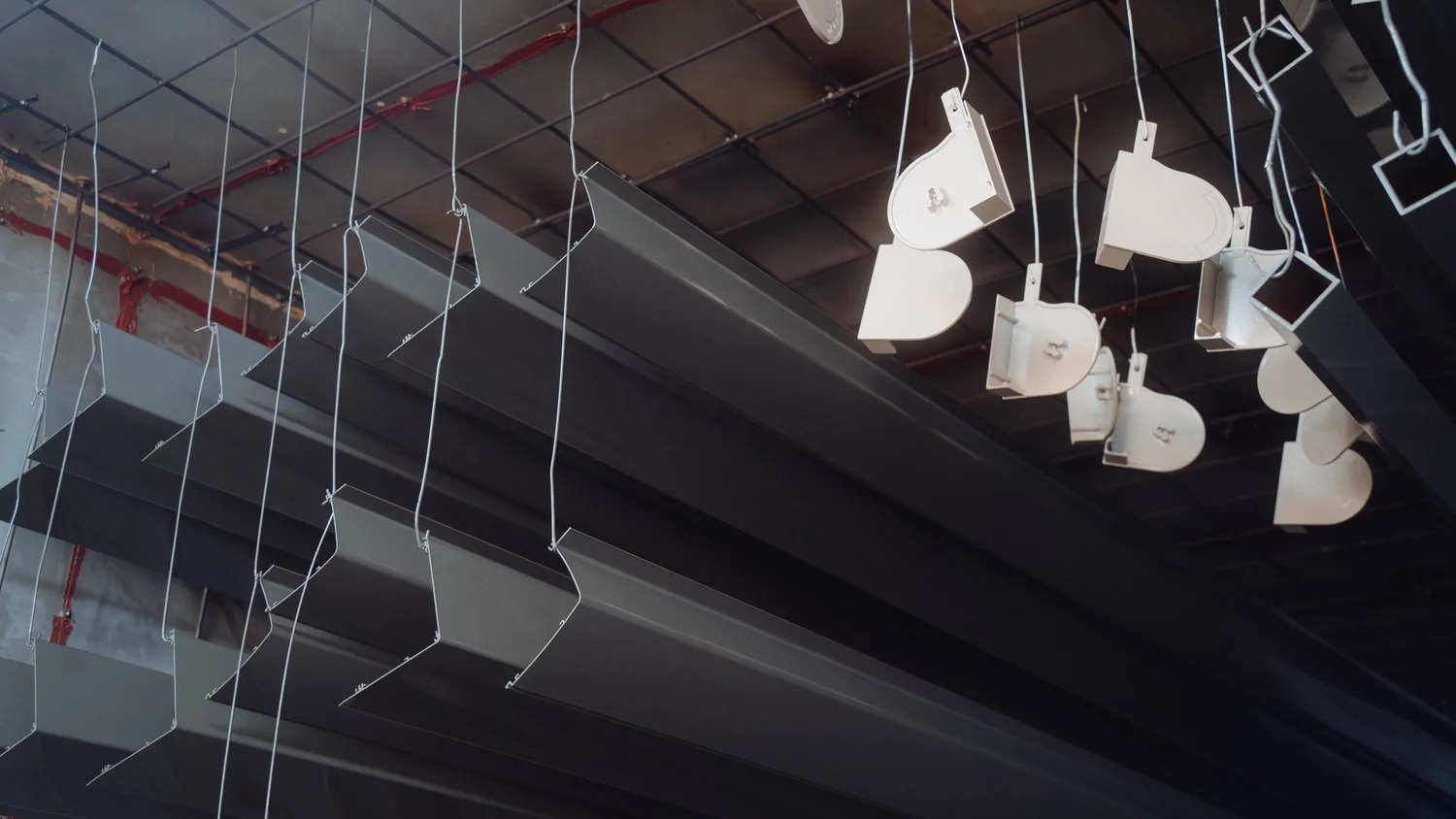
Cover Flashings in Auckland — Custom Made & Powder Coated
Cover flashings span and protect joints between building elements — expansion joints, movement joints, and abutments — allowing structural movement while maintaining weathertightness.
Get A Free QuoteWhat Are Cover Flashings?
Cover flashings are formed metal profiles designed to bridge and seal joints between building elements where movement, thermal expansion, or differential settlement means that a rigidly fixed flashing would fail. The defining feature of a cover flashing is that it accommodates movement — one side is fixed, the other slides or laps freely, so the flashing can expand, contract, or shift with the building without buckling or pulling away from the surface.
Common applications include expansion joints in long walls or roofs, movement joints between separate building sections, the junction between different cladding types, and penetrations through roofs and walls that require a weathertight but flexible seal around them.
Cover flashings are often required by structural engineers or architects as part of a building's movement joint specification. We manufacture cover flashings to order to your specified profile, dimensions, and material, and can powder coat to any colour to integrate with the building's exterior.
Where Are Cover Flashings Used?
- Expansion joints in long walls where thermal movement requires a break in the structure
- Movement joints between separate building sections or additions
- Abutments where two different cladding types meet and need a transition flashing
- Around penetrations through roofs and walls (pipes, posts, conduits)
- At the junction of new and existing construction on renovation and extension projects
- On large commercial roofs where the membrane terminates at a wall or raised edge
Materials Available
We manufacture cover flashings in the following materials:
- Stainless Steel — superior corrosion resistance, ideal for coastal, commercial and residential applications
- Galvanised Steel — traditional zinc-coated steel, suitable for a wide range of applications
- Aluminium — lightweight with excellent corrosion resistance and good movement accommodation, popular for coastal and architectural work
- Colorsteel — pre-painted steel in standard colours for visible cover flashings that need to match cladding
Profile Options
We offer both standard profiles and custom-made to spec. All cover flashings are manufactured to drawing or specification. The profile must be designed to accommodate the expected movement range while maintaining the required overlap on each side at maximum and minimum movement. For engineer-specified joints, we work from the specification drawings.
Colour Options
Powder coating is available on all steel and aluminium cover flashings. Colour matching to the surrounding cladding minimises the visual impact of the expansion joint on the building facade. Available colours include:
- Colorsteel colour range — Karaka, Ironsand, Ebony, Grey Friars, Sheerstone, Dune, Gull Grey, Thunder and others
- Resene colour matching
- Dulux colour matching
- Full RAL colour range
- Custom colour matching from a physical sample
Who Uses Cover Flashings?
Our cover flashing customers include:
- Builders — detailing movement joints and abutments on both residential and commercial projects
- Architects and designers — specifying movement joint covers to suit structural and weathertightness requirements
- Commercial contractors — sourcing large quantities of expansion joint covers for commercial buildings
NZ Building Code Considerations
Flashings play a critical role in meeting the weathertightness requirements of the New Zealand Building Code. Cover flashings over movement joints must be detailed to maintain weathertightness throughout the full range of building movement. Always consult your building consent documentation and structural engineer's specification for requirements relating to expansion and movement joints.
Related Flashings
Cover flashings are typically used alongside these other flashing types on the same building:
- Parapet Cappings — for the tops of parapet walls that may include expansion joints
- Corner Flashings — for the wall corners adjacent to the movement joint
- Window Flashings — for openings in the same wall
- Apron Flashings — for roof-to-wall junctions on the same building
Frequently Asked Questions
A cover flashing is a metal profile that bridges and covers a joint, gap, or penetration in a building surface. Unlike flashings that are fixed to one surface, a cover flashing typically overlaps both sides of a joint and is fixed on one side only, allowing the other side to slide freely as the building moves. This accommodates thermal expansion and structural movement without breaking the weathertight seal.
Standard flashings are typically fixed to the structure at both edges. Cover flashings are designed to accommodate movement — they are fixed on one side and have a sliding or overlapping detail on the other to allow the joint to open and close without the flashing buckling or pulling away.
Yes. We can powder coat cover flashings in any RAL, Resene, Dulux, or Colorsteel colour. Contact us with your specification.
The width depends on the joint width, the anticipated movement range, and the lap required on each side of the joint to maintain weathertightness throughout the movement cycle. Provide us with these details and we will manufacture to suit. For complex joints, an engineer or architect's specification is the best starting point.
Yes. We manufacture cover flashings to engineer or architect drawings. Send us the relevant detail drawings and your required quantities and we will provide a quote. Turnaround varies depending on complexity — contact us for a timeframe.