What is Powder Coating?
Powder coating is a dry finishing process that applies a free-flowing, electrostatically charged powder to a metal surface. The coated item is then cured in an oven, where the powder melts and flows into a smooth, hard film.
Unlike traditional liquid paint, powder coating uses no solvents whatsoever. The coating material is a finely ground dry powder — typically a thermosetting polymer — that is applied using an electrostatic spray process and then cured under heat. This fundamental difference means no volatile organic compounds (VOCs) are released during application, making it a cleaner and more environmentally responsible finishing method.
Since its development as a commercial finishing process in the 1960s, powder coating has steadily replaced liquid paint across a wide range of industries. Today it is the preferred method for finishing everything from architectural metalwork and automotive components to outdoor furniture and industrial equipment. Its combination of durability, efficiency, and environmental benefits has made it the go-to choice for professional metal finishing.
In this guide, we cover how the electrostatic application process works, what happens during oven curing, the advantages powder coating holds over traditional paint, which materials can be powder coated, and the industries that rely on it most.
The Electrostatic Application Process
The 'magic' of powder coating lies in how the powder is applied. Electrostatic attraction ensures even, efficient coverage even on complex shapes.
The process begins with an electrostatic spray gun, which imparts a positive electrical charge to the powder particles as they pass through the nozzle. The metal item being coated is connected to an earth (ground), creating an electrical potential difference between the charged powder and the grounded workpiece. This causes the powder particles to be attracted to the metal surface and cling to it firmly, even before curing.
One of the key advantages of electrostatic application is the wrap-around effect. Because the charged particles are drawn to the grounded metal from all directions, powder naturally reaches the backs, edges, and undersides of complex shapes. This results in far more uniform coverage than you would typically achieve with a liquid spray gun, where the operator must manually direct paint to every surface.
Any powder that does not adhere to the workpiece — known as overspray — can be collected, filtered, and reused. This makes the process significantly more material-efficient than liquid paint, where overspray is generally lost as waste.
Curing in the Oven
Once the powder is applied, the item goes into a curing oven where heat transforms the dry powder into a continuous, cross-linked polymer coating.
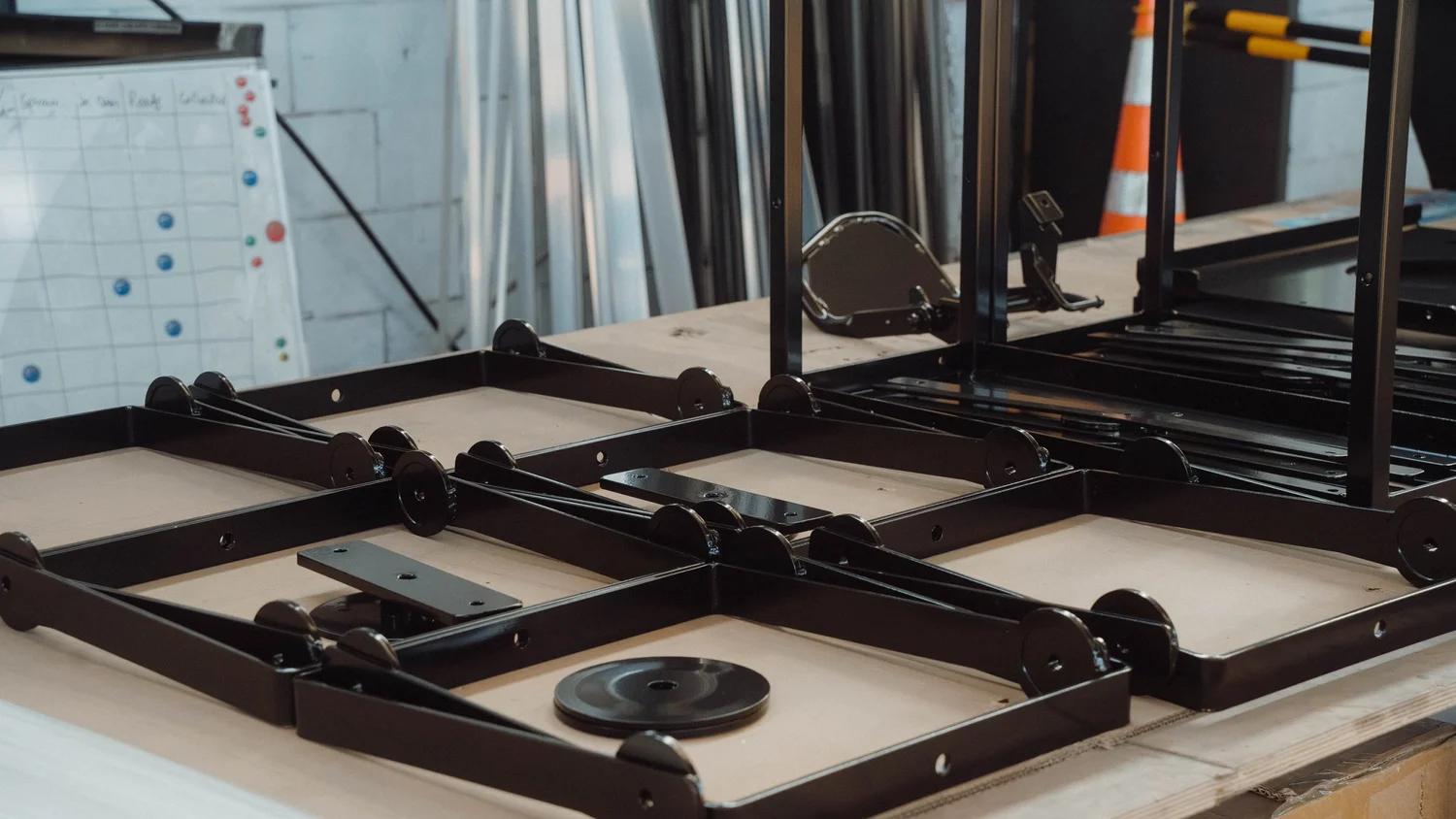
When the coated item enters the curing oven, the heat causes the powder particles to melt and flow together into a smooth, continuous liquid film across the entire surface. As the temperature is maintained, a chemical reaction called cross-linking occurs — the polymer chains bond together to form a dense, interconnected molecular network. This cross-linked structure is what gives a cured powder coat its exceptional hardness, chemical resistance, and durability.
Getting the curing temperature and dwell time right is critical. If the item is under-cured — either the temperature was too low or the time too short — the powder may not fully cross-link, resulting in a coating that is softer, less durable, and more susceptible to chipping or peeling. Over-curing, on the other hand, can cause the coating to become brittle, discolour, or develop an uneven surface texture. A properly cured powder coat will have a consistent colour, smooth finish, and the toughness to withstand everyday wear and tear.
Advantages Over Traditional Liquid Paint
Powder coating offers a range of benefits that have made it the preferred finishing method across automotive, architectural, and industrial sectors.
Durability is where powder coating truly stands apart. A properly applied powder coat is significantly more resistant to scratching, chipping, fading, and general wear than most liquid paint finishes. The cross-linked polymer structure creates a tough, flexible film that absorbs impacts rather than cracking or flaking away.
From an environmental standpoint, powder coating contains no solvents and releases no volatile organic compounds (VOCs) during application. Overspray powder can be recovered and reused rather than being discarded as hazardous waste. This makes the process cleaner for both the workshop and the surrounding environment.
Powder coating also achieves a thicker, more even coating in a single pass than liquid paint typically can. Edges and corners — areas where liquid paint tends to thin out — receive better coverage thanks to the electrostatic attraction. And because the process is highly repeatable, you get consistent finish quality from the first item in a batch to the last.
What Materials Can Be Powder Coated?
Powder coating requires that materials be able to conduct electricity for the electrostatic process and withstand the oven curing temperatures.
The most commonly powder coated metals include mild steel, aluminium, stainless steel, cast iron, and galvanised steel. Each of these materials conducts electricity — which is essential for the electrostatic application process — and can handle the elevated temperatures required during oven curing without warping or degrading.
Materials that are not electrically conductive or cannot tolerate heat generally cannot be powder coated using a standard process. This rules out most timber, standard plastics, and glass. There are some specialist pre-treatment methods that allow certain non-conductive materials like MDF to be powder coated, but these are the exception rather than the rule.
If you are unsure whether your item can be powder coated, the best approach is to get in touch with our team. We can assess the material, size, and suitability of your project and recommend the best finishing approach.
Industries and Applications
Powder coating is used across a huge range of industries and applications, from everyday consumer products to heavy industrial equipment.
Powder coating is used across an enormous range of sectors. In the automotive world, it is the standard finish for bull bars, wheels, roll cages, and engine bay components. Architectural and construction projects rely on it for balustrades, handrails, gates, fences, and structural steelwork. Outdoor furniture manufacturers choose powder coating because it stands up to sun, rain, and constant use far better than paint.
Marine fittings, agricultural equipment, electrical enclosures, gym equipment, commercial signage, and retail display fixtures are all commonly powder coated as well. In New Zealand specifically, the combination of high UV exposure and coastal salt air makes a durable, weather-resistant finish essential — which is why powder coating is so widely specified across the country.
Here in Auckland, Coating Lab works with customers across all of these industries, from individual vehicle enthusiasts bringing in a set of wheels to trade clients with ongoing commercial work. Whatever the application, the principle is the same: a tough, long-lasting finish that protects your investment and looks the part. Get in touch for a free quote on your next project.
Frequently Asked Questions
Powder coating is a dry finishing process used to protect and colour metal surfaces. A fine powder is sprayed onto the metal using an electrostatic charge, which makes the powder cling evenly to the surface. The coated item then goes into a curing oven, where the powder melts and hardens into a smooth, tough, long-lasting finish. It is widely used for everything from car parts and outdoor furniture to gates, fences, and industrial equipment.
The process has three main steps. First, the metal item is prepared — cleaned and sometimes sandblasted to remove any old coatings, rust, or contaminants. Next, dry powder is sprayed onto the item using a gun that gives the powder an electrostatic charge, causing it to stick to the grounded metal surface. Finally, the coated item is placed in a curing oven where the powder melts, flows together, and chemically bonds into a hard, continuous coating.
Most metals can be powder coated, including mild steel, aluminium, stainless steel, cast iron, and galvanised steel. The material needs to conduct electricity for the electrostatic process and withstand oven curing temperatures. Materials like timber, standard plastics, and glass generally cannot be powder coated. If you are unsure whether your item is suitable, contact our team and we will be happy to advise.
For most metal finishing applications, powder coating is the superior option. It is more durable, more resistant to scratching and chipping, produces no volatile organic compounds (VOCs), and delivers a more consistent finish. However, wet spray painting has its place — particularly for items that are too large for an oven, made from non-metallic materials, or require specialised coatings. Coating Lab offers both powder coating and wet spray painting services, so we can recommend the best approach for your specific project.